Discovery of Kovalyov’s Nose in the Bread
The NoseThe discovery of Platon Kovaloff’s nose inside a loaf of bread is the abrupt, grotesque event that links an ordinary breakfast to the story’s larger crisis of bodily identity and social rank. Ivan Yakovlevitch finds the nose while cutting bread, recognizes it as belonging to a regular customer, and is immediately caught between astonishment, fear, and his wife’s demand that he remove it from their home.
Breakfast and Discovery
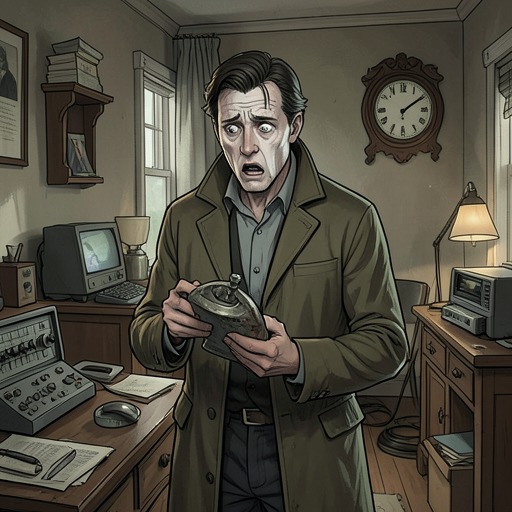
For propriety’s sake, Ivan Yakovlevitch puts a coat over his shirt before sitting down to breakfast. He shakes out salt, prepares two onions, and begins cutting the loaf. Only after dividing it in two does he notice something whitish embedded in the bread. He probes it carefully with his knife, then his finger, and discovers that it is a nose.
The small domestic gestures make the revelation stranger: the nose is not found in a medical setting or during a confrontation, but in the food Ivan is preparing to eat. At first he lets his hands fall in astonishment, then rubs his eyes and feels the object, as though touch might settle what sight cannot. The narrator confirms that it is an actual nose and that it seems to belong to someone Ivan knows.
Recognition and Immediate Conflict
Ivan identifies the nose as Platon Kovaloff’s, a member of the Municipal Committee whom he shaves every Sunday and Wednesday. That professional connection turns a bizarre discovery into a personal liability: this is not an unclaimed object but part of a familiar customer’s body. Ivan is more dead than alive with fright, while his wife, Prasskovna Ossipovna, responds with even greater disgust.
She accuses him of having cut off a customer’s nose and threatens to report him to the police. Her charge draws on the practical intimacy of his work: customers, she says, have complained that he grips them so tightly by the nose while shaving that they can hardly sit still. Ivan denies neither the discovery nor its identity; instead, he proposes wrapping it in cloth and leaving it in a corner temporarily, before taking it away later.
Prasskovna refuses to let the nose remain in the room. She rebukes Ivan for understanding nothing beyond sharpening a razor and insists that he take it somewhere else rather than leave her to face responsibility at the police office. The discovery therefore produces its first consequence not through any explanation of how the nose entered the loaf, but through a domestic argument over who must bear the risk of its presence.
The Nose and Kovaloff’s Social Identity
The nose’s identity carries weight because Kovaloff is invested in the status attached to his name and rank. He has been a Caucasian committee-man, but prefers to call himself Major, a title he believes enhances his importance. His daily appearance is carefully marked by a stiff, clean collar, distinctive whiskers, and seals, while his ambitions include obtaining a position such as vice-governor or, failing that, a departmental bailiff’s post.
His social aspirations extend to marriage: he is willing to marry only a woman who can bring a dowry of two hundred thousand roubles. Against this portrait, the nose’s later appearance as a state councillor becomes a pointed inversion of Kovaloff’s self-presentation. The body part detached from him acquires a uniform and a higher rank, while the man whose identity depended on titles and social prospects is left with a blank where his nose should be.
From Household Object to Independent Figure
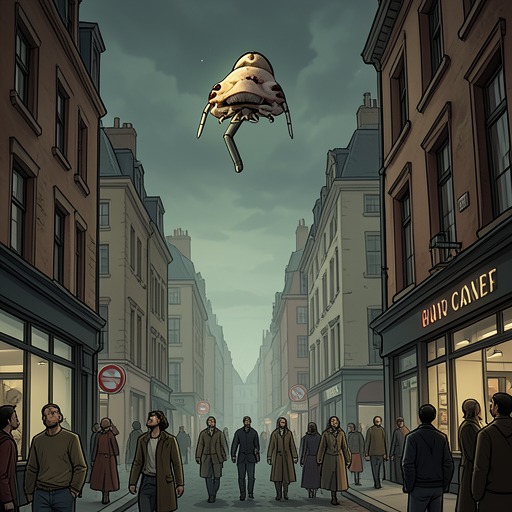
The breakfast discovery precedes Kovaloff’s own recognition that his face has become a smooth vacancy. When he later encounters the nose in uniform, it arrives in a carriage, wears a gold-embroidered coat and a stiff high collar, and carries a sword; its plumed hat marks it as a state councillor. The impossible transformation gives the loaf’s contents a second, more disturbing meaning: the nose is not merely missing flesh but an apparently autonomous social person.
When Kovaloff addresses it as his own nose, it rejects their relationship and points to the difference between their departments, judging by the buttons on his uniform. The nose’s insistence on separate identity makes literal the hierarchy Kovaloff himself performs by calling himself Major rather than committee-man. His attempts to seek help likewise expose how status governs the crisis: he wants a missing-nose advertisement published without his name, fearing that his female acquaintances might hear of it, while officials dismiss or refuse his extraordinary claim.
Narrative Significance
The discovery begins with a precise reversal of ordinary categories: a body part is concealed in food, yet is recognizable as belonging to a specific person. The scene’s matter-of-fact sequence—cutting, noticing, probing, drawing out—makes the impossible arrive through everyday procedure rather than through an explanation. The domestic argument then shifts attention from how the nose could be there to the social danger of being found with it.
That shift anticipates the story’s central comic tension. Kovaloff’s face, public identity, and ambitions are bound together, but the nose becomes more socially elevated after separating from him. The bread discovery thus serves both as the inciting event and as the first image of a world in which bodily possession, personal identity, and official rank no longer reliably coincide.